What Does It Mean to Dream About Water?
Water is the language of emotion in dreams. Calm, clear water often mirrors peace and clarity, while turbulent or murky water may reflect turmoil or confusion — the state of the water is usually the state of your inner life.
Water rarely appear alone in dreams — see also dreaming of jellyfish and dreaming of crab. And if the water hid something with teeth, see dreaming of a crocodile. And when the water rises as one giant wave, see dreaming of a tsunami.
Know someone who keeps dreaming this? Send it to them 👇
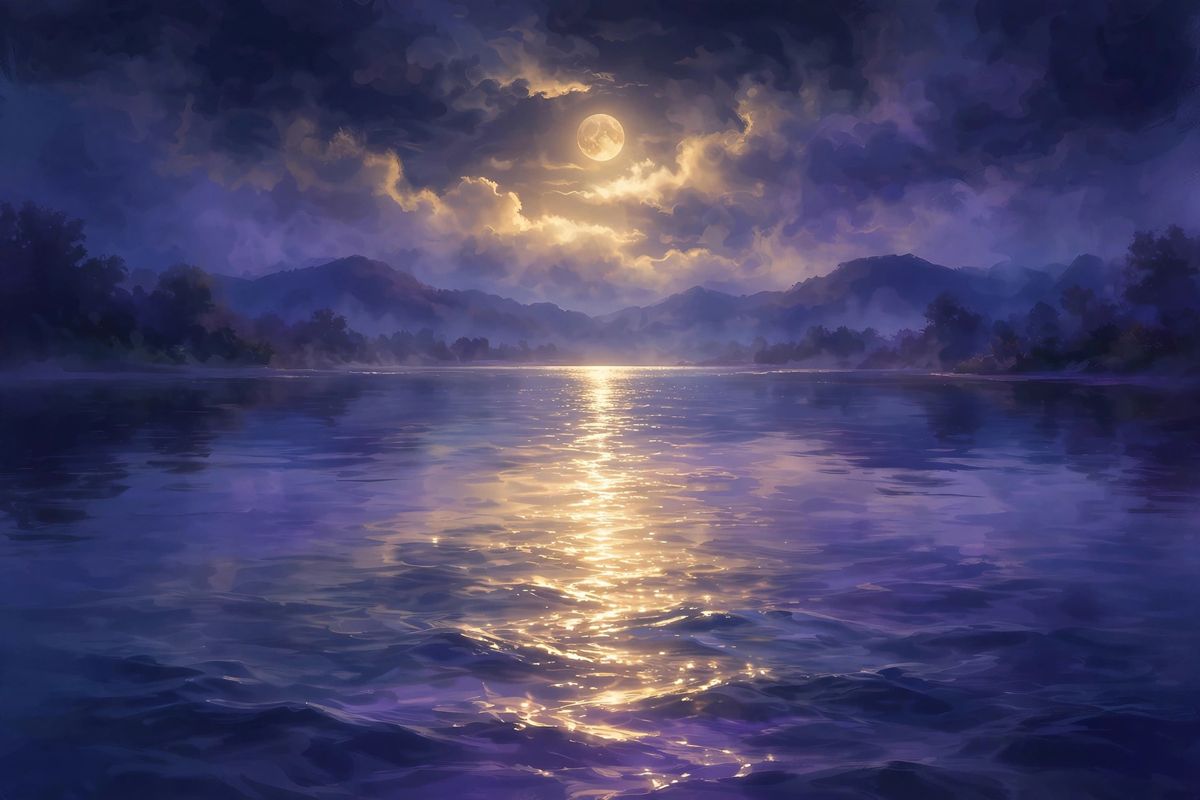
Key insight: A woman in her early forties had been through a hard year. Her marriage had ended, and she felt like she was drowning in paper work and worry. She dreamed she was swimming in a wide, calm lake under a full moon. The water was clear, and each stroke felt easy. She woke up feeling peaceful for the first time in months. She decided to make more room for that calm in her waking life. She walked by the river each morning, and she turned down extra work she did not need. Slowly, the choppy feeling settled. A year later she told a friend the dream had been a turning point. Her life was not perfect, but the water was clear again, and she could see where she was going.
The Core Meaning
Across dream traditions, water stands for feeling and the unconscious: the vast inner territory beneath everyday awareness. Because water takes the shape of its container, it also adapts to your question — it shows you your emotional weather, not a fixed verdict.
The single most useful detail is the water's condition. Clear and calm suggests emotional clarity; dark or choppy water suggests feelings you have not fully faced; rising water can mirror pressure building. Your interaction matters too — swimming confidently reads very differently from struggling to stay afloat.
Pay attention to depth and temperature, too. Shallow, warm water you can stand in often points to feelings you can handle. You know where you stand, and you feel safe. Deep, cold water you cannot see into points the other way. Something feels bigger than you, or it is still hidden from you. Moving water matters as well. A river that flows in one clear direction can mirror a feeling that is going somewhere. Still water in a pond or a bath can mirror a feeling that is sitting with you, waiting for you to look at it.
Size changes the picture, too. A sink, a pool, or a flooded room is close and personal. It is about your own home, body, or daily life. When the water in your dream opens out wide, with no edge in sight, the feeling is usually bigger and older. That is ocean territory, and our guide to dreaming about the ocean covers that wider, deeper picture in full.
A Psychological Perspective
Depth psychologists, Jung foremost among them, treated water as the prime image of the unconscious: dreams of diving, surfacing, or wading map the movement of material between unaware and aware. Modern researchers frame water dreams more simply as emotional barometers, rising and falling with waking-life stress.
There is also a bodily layer: thirst, a full bladder, or even the sound of rain can prompt water imagery. Not every ocean is symbolic — sometimes the dream is just the body talking.
Sigmund Freud gave water dreams a more personal reading. In his book The Interpretation of Dreams, first published in 1899, Freud called dreams the royal road to the unconscious. He taught that a dream has a surface story, and a hidden meaning under it. The hidden part holds wishes and feelings you push down during the day, and water could carry those feelings in a safe, changed form. You can read more in this overview of Freud's Interpretation of Dreams on Verywell Mind.
Carl Jung, who first worked with Freud and later broke away, saw it in a wider way. Jung called water the commonest symbol for the unconscious. He wrote of the lake in the valley as the part of you that sits below clear thought. For Jung, a dream does not hide the truth. It shows the truth in pictures, and it tries to bring balance. If your waking life is all dry logic and work, water may come to add feeling back in. Modern dream work keeps parts of both views, as this guide to interpreting dreams on Healthline explains: look at the image, then look at how you felt and how you acted in the dream.
Common Variations & What They May Suggest
- Calm, clear water — often reflects emotional clarity and peace — you can see to the bottom of things, literally and figuratively.
- Turbulent waves or a stormy sea — may mirror emotional upheaval: conflict, grief, or a period where feelings keep crashing over you.
- Murky or dirty water — can suggest confusion or feelings you would rather not look at directly — something clouding your judgment.
- Rising or flood water — often symbolizes pressure building past comfortable levels — emotions, workload, or expectations threatening to overflow.
- Drinking clean water — tends to read as refreshment and renewal: taking in what you need, emotionally or spiritually.
- Drowning or struggling to swim — may reflect feeling overwhelmed — too much coming at you with too little support. See also our page on drowning dreams.
- Leaking water at home — a small drip, a wet wall, or water coming through the roof often points to a small problem you keep putting off. It can mirror a worry about money, repairs, or a family tension that is slowly getting worse. The leak is small, but you know it will not fix itself.
- Water you cannot cross — a wide river, a broken bridge, or deep water in your path often mirrors a step you want to take but do not feel ready for. The other bank stands for the new job, the hard talk, or the change. The water shows the feeling that sits between you and it.
- Rain — gentle rain often reads as relief and a fresh start, like stress being washed off after a hard week. Hard rain that soaks you or blocks your view can mirror sadness, bad news, or a mood you cannot shake. Warm rain feels kind. Cold rain rarely does.
Cultural & Spiritual Symbolism
Water carries sacred weight nearly everywhere: baptism and ritual washing frame it as purification and rebirth, while flood myths — from Mesopotamia to the Bible — cast rising waters as both destruction and cleansing reset.
In feng shui and several folk traditions, flowing water signifies the movement of fortune and energy; stagnant water, the opposite. The spiritual question water dreams pose is consistent: what needs to flow, and what needs to be cleansed?
Other traditions carry the same heart in their own way. In Islam, water is a gift of life, and washing with water before prayer, called wudu, is a daily act of getting clean in body and in mind. In Hindu life, the river Ganga is honoured as a holy mother, and bathing in her waters stands for washing away the past and starting clean. In Japan, the Shinto practice of misogi uses cold water, often under a waterfall, to clear the spirit. In ancient Egypt, the yearly rise of the Nile meant food and life for the whole land, so rising water there could be a sign of plenty, not fear. The details differ, but the thread is the same: water takes away what is heavy, old, or unclean, and it gives life back.
What To Do After This Dream
Name the weather. Finish the sentence: my emotional life right now feels like ___. Then ask what the water was doing — if it was rising, where do you need an outlet or a boundary? If it was calm, notice what is working and protect it.
A simple grounding practice: write the feeling you have been avoiding at the top of a page, then list three small, concrete things that would make the water calmer this week. For a reusable step-by-step method you can apply to any dream, see our guide on how to interpret your dreams.
Make it a five minute habit. As soon as you wake up, write down three things: the colour of the water, what it was doing, and where you were in it. Then write one line about the day before. Did you argue, get big news, or hold back tears? If the same water dream comes back three or four times, treat it as a flag, not a scare. Pick the smallest step that would lower the water a little this week: one honest talk, one bill paid, one early night, or one hour of real rest. Small steps count. Dreams often change after you act, and calmer water in the next dream is a good sign that the step helped.
Frequently Asked Questions
What does clear water mean in a dream?
Clear, calm water is one of the most positive water images — typically read as emotional clarity, honesty with yourself, and inner peace. Many traditions treat it as a good sign for the period ahead.
What about murky or dirty water?
Murky water often suggests confusion, mixed feelings, or something clouding your judgment. Symbolically it invites a closer look at what you might be avoiding seeing clearly.
Does dreaming of floods mean something bad will happen?
Floods symbolize overwhelm — emotions or pressures rising past capacity — not literal disaster. Read it as a signal about your current load, not a prediction about the world.
What does it mean to drink water in a dream?
Drinking clean water usually reads as nourishment and renewal: you are taking in what you need, whether that is rest, honesty, or spiritual refreshment.
Why do I dream of the ocean specifically?
The ocean's vastness often represents the deep unconscious or big, hard-to-name feelings — awe, grief, longing. Your feeling toward the ocean in the dream shapes the meaning more than the ocean itself.
Related Dreams
Browse the full dream dictionary A–Z
Beyond this dream: repeating numbers carry messages too — explore the angel numbers index, and notice the patterns with a dream journal.
Part of a bigger pattern: this dream belongs to our Water & Weather Dreams collection — explore all 9 dreams in this family in one place.
Dream meanings on StarsToday explore symbolic and psychological perspectives to help you reflect — they are insights, not facts, and never medical, mental-health, or professional advice. If a dream leaves you feeling distressed, consider speaking with a qualified professional.