What Does Your Life Line Mean in Palmistry?
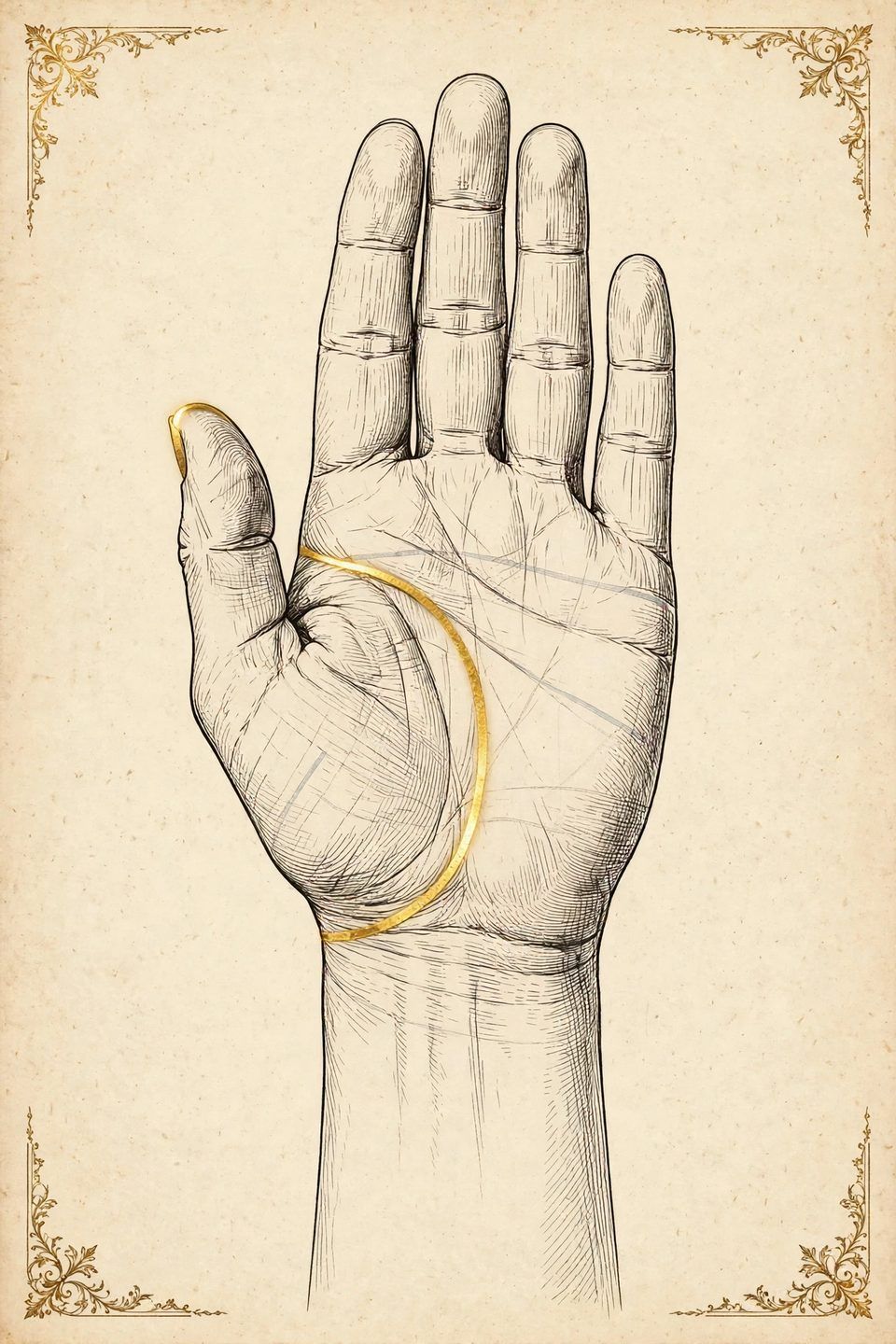
It's the first line everyone looks for. It's also the first one most people get wrong. The life line is the deep curve around the mound at the base of your thumb. And no — its length does not tell you how long you'll live. In palmistry, this line shows your energy. It shows how much strength you bring to daily life. It also shows how you handle change, and where your big turning points tend to fall. Think of it less as a countdown, and more like a diary of your life.
New to palm reading? The beginner's guide to palm reading lines shows you where each big line sits. Your fate line tells the career side of the same story.
Know someone who worries about a short life line? Send them this 👇
The Core Meaning
The life line starts between your thumb and index finger. It curves around the fleshy mound at the base of your thumb — the Mount of Venus. Then it ends near your wrist. Readers look closely at the shape of that curve. A wide, sweeping curve means a big love of life. It points to strong energy, warmth, and a lively spirit that others can feel. A tighter curve that hugs the thumb means a quieter nature. Your energy stays in reserve. You choose your pleasures with care, and you recharge in peace and quiet.
Depth matters too. A deep, clear life line means strong energy and good health. It points to someone who dives into life and bounces back fast. A faint line means a gentler engine. Your energy needs care and protection. You do best when rest is part of your plan, not a treat at the end. Neither line is better than the other. The line just describes how your energy works. It does not grade you.
Now the big myth, one more time. A short life line does not mean a short life. A long one does not promise a long life either. Short lines belong to people with strong, focused bursts of energy. Long lines belong to people who pace themselves over the years. The line shows your style of living, never its length. Every serious palmistry tradition agrees on this. It's the first thing a good reader will tell you.
What This Line Reveals
Your energy and health style. The life line shows your body's pattern. It shows how much stamina you have, and how fast you bounce back. It also shows which years of life asked the most from your body. Readers look closely at parts where the line runs thin or chained. Those parts point to low-energy chapters. They also look for places where the line grows deep again. Those point to recovery and fresh strength. It's a style chart, not a medical check. Never use it as one.
Major life changes. Readers follow the line from its start near your fingers down to your wrist. The start stands for childhood. The end stands for your later years. So each mark along the line sits at a point in time. A break, a sideways shift, or a sudden change in depth means a turning point at that age. It could be a move, a career change, or a love that reset your story. People are often surprised by how well a break lines up with the year everything changed. That's part of why this line is so famous.
Personality and love of life. The curve's sweep shows your nature. A wide curve means you're open and active. You love new experiences, and you learn by doing. A close curve means you're careful and home-loving. You learn by watching first. If your life line starts joined to your head line, it points to a careful start in life, shaped by family. If it starts apart, it points to freedom that came early and stayed.
Common Variations & What They May Suggest
- Long and deep: The classic strong line — steady energy, good recovery, and a full, active life. Readers look for clean depth all the way down. It's the even depth, not the length alone, that matters most.
- Short life line: Not a short life — a packed one. It means strong energy spent in bursts. You live by projects and seasons, not by slow, even pacing. Your enthusiasms run high while they last.
- Faint or thin: In the old reading, this means a delicate energy system. Your reserves run low, and you tire fast. You have a real need for sleep and rest. This line often shows up on sensitive people whose energy is more mental than physical.
- Broken life line: This is the mark people ask about most. A clean break means a big stop, or a change of direction at that age. It could be a new country, a new career, or a new sense of who you are. If the line restarts strongly, and the new part overlaps the old, it means you got through the change. It was not a collapse.
- Double life line: A thin second line runs inside the main curve. Some call it the line of Mars, or the guardian line. It means extra protection and backup energy. Think of it as a second engine. You have strong support from others, and a gift for bouncing back from hard times.
- Chained or islanded stretches: Small links and loops along the line point to hard chapters. These are times when your energy leaked away. Your health needed care, or life asked more than it gave back. Readers note where these marks fall in the line's timeline. They always check if the line runs clear again after them.
- Branches rising or falling: Small lines that branch upward mean efforts that paid off. You reached for a goal at that age, and you got it. Branches that droop downward mean energy given away. These are duties, losses, or promises that cost more than they gave back.
Which Hand to Read & How
Read your writing hand first. That hand shows your lived life. It shows the energy you run on now, plus every change your choices have made. Your other hand shows the energy you were born with. If the life line is deeper on your writing hand, readers say you've built your strength. If it's deeper on your other hand, they say you were given more than you use right now. That's an invitation, not a criticism.
To find the line's timeline, picture it split from top to bottom. The start near your fingers is childhood and youth. The middle of the curve is midlife. The end near your wrist is your later years. Readers guess the age of a mark by its place on the whole curve. A break one-third of the way down falls, roughly, in the first third of life. Treat these guesses as chapters, not birthdays. Palmistry deals in seasons, not dates.
Read the line in bright, natural light. Keep your hand relaxed and slightly cupped. A palm stretched flat stretches the line too, and can fake breaks. A relaxed hand shows the true curve. Compare both hands side by side before you settle on a reading. With the life line, more than any other, the comparison is the reading.
Cultural & Spiritual Symbolism
- Jeevan Rekha (India): In Samudrika Shastra, the life line is the Jeevan Rekha. "Jeevan" means life as lived energy, not years. Readers always read it with the other big lines, never alone. It circles the Venus mount, which ties your energy to love, family warmth, and the senses.
- The earth line (China): Chinese palmistry calls the life line the earth line. It's the most grounded of the three great lines. It's tied to the body, your ancestors, and your roots. Its curve around the thumb mound shows the strength of your base in the world.
- Greek and European chiromancy: Greek readers timed life events by this line. It was the one line they believed could be measured against a life. Later readers, in medieval and Renaissance times, marked it with threads and compasses. The modern, gentler reading keeps the timeline and drops the fortune-telling.
- The guardian line in folk tradition: In European folk palmistry, the thin inner line was called a guardian or angel line. It's a sign that someone watches over you. Or it means a second strength rises when your first one runs out. It's still one of the marks readers love to find most.
What To Do With This Reading
Treat the life line as an energy check, not a fortune. The whole tradition points at how you spend and restore your strength. Once you've read your line, try the three moves below.
Match your pace to your line, honestly. If your line looks faint or chained in the stretch for your age now, the message is simple. Your calendar probably tells you the same thing. Rest is not optional for you. Put rest in first, and let work fit around it. Don't do it the other way around.
Find your break — and name what it taught you. Most adults can point to the chapter where their life line shifts, breaks, or grows deeper. Naming that turning point helps you. So does naming what it built in you. A mark on the skin then becomes self-knowledge you can actually use.
Check the line again in a year, with a photo. Life lines do change, but slowly. Faint parts grow deeper, and small new lines appear. Take a palm photo once a year, with the same light and angle. It shows you your own trend over time. That's worth more than any single reading.
Want the rest of the map? Browse the complete palmistry index. Your heart line, head line, fate line, and marriage lines each get the same slow, full treatment.
Frequently Asked Questions
Does a short life line mean a short life?
No. This is the biggest myth in palmistry, and every serious tradition rejects it. A short life line means packed, intense energy. It points to a person who lives in strong seasons and projects. Your lifespan is not written on your hand. No palm line can tell you how long you'll live.
What does a broken life line mean?
A break means a big change, or a stop, at that stage of life. It could be a move, a career shift, a health chapter, or a fresh start as a person. What matters most is what the line does next. A strong restart, above all one that overlaps the old line, means recovery and a change that worked. It does not mean disaster.
Where is the life line on your palm?
It's the strong curve that starts between your thumb and index finger. It curves around the fleshy mound at the base of your thumb, and it ends near your wrist. It's usually the deepest line on your hand, and the easiest one to find.
What does a double life line mean?
A thin second line runs inside the main life line. It's called the line of Mars, or the guardian line. It means extra backup energy and protection. You get strong support from others. You find a second wind in hard times. And you have a gift for bouncing back from setbacks.
Can the life line change over time?
Yes, but slowly. The main curve stays stable. Its depth and small marks can shift over the years, as your health, habits, and hands change. Readers suggest you compare dated photos of your palm. Don't watch for change week by week.
Related Palmistry Readings
First time reading palms? Browse the complete palmistry index.
Your hands hold one kind of sign. The sky holds another. Read about angel number 444 — the number of solid ground and protection. And meet Leo, the sign astrology links to energy and heart.
Palmistry readings on StarsToday explore traditional, cultural, and psychological perspectives — not facts, and never medical, mental-health, or professional advice. Palm lines cannot diagnose illness or measure how long you will live; if you have a health concern, speak with a qualified professional.